A Royal Society of Chemistry Project

This new qualitative research suggests there are six key interacting themes that impact retention and progression for Black and minoritised ethnicity chemists.

The New Perspectives Series

In a world where global challenges and advances in technology bring both uncertainty and new possibilities,
the chemical sciences have a critical role to play. But what will that role be? How can we maximise the impact
we make across academia, industry, government and education? And what actions should we take to create a
stronger, more vibrant culture for research that helps enable new discoveries?
Our perspectives series addresses these questions through four lenses: talent, discovery, sustainability and
science culture. Drawing together insights and sharp opinion, our goal is to increase understanding and inform
debate – putting the chemical sciences at the heart of the big issues the world is facing

Overarching Goals

Science Culture

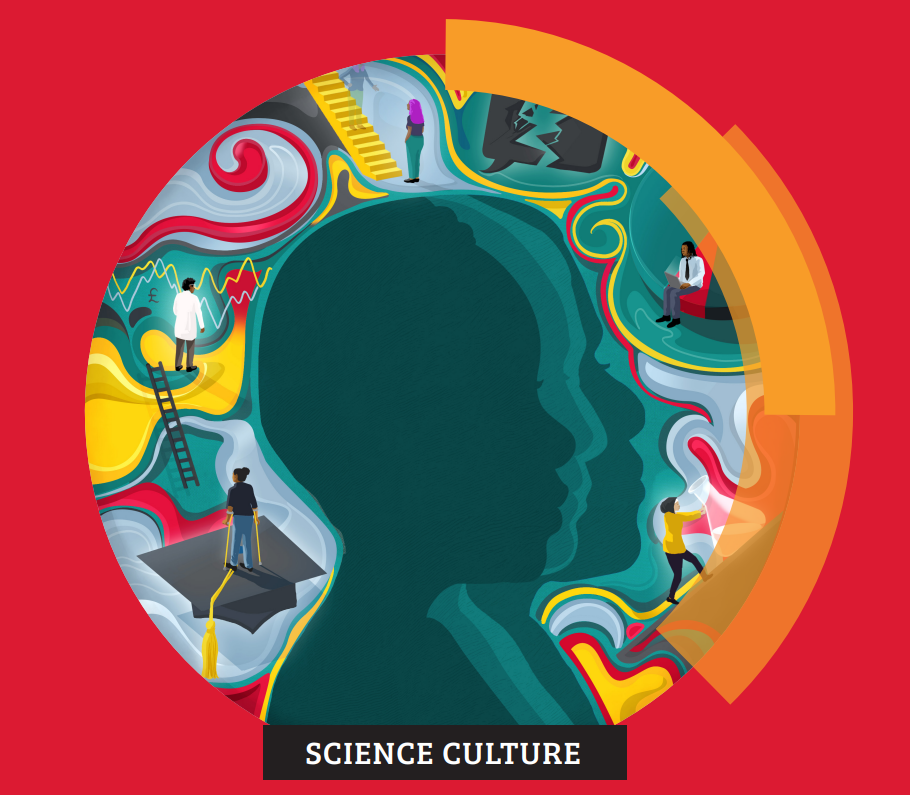
Scientific research and innovation is becoming increasingly multidisciplinary and collaborative. How do we create the open, inclusive, dynamic environments that will allow scientists to thrive and make their maximum contribution to global prosperity? And
how should we recognise and incentivise the breadth of skills and diversity of people, contributions and achievements that enable new discoveries and breakthroughs?

Sustainability

Our planet faces critical challenges – from plastics polluting the oceans, to the urgent need to find more sustainable resources. But where will new solutions come from?
How can we achieve global collaboration to address the big issues? And where can the chemical sciences deliver the biggest impacts?

Talent

Talent is the lifeblood of the chemical sciences. But how do we inspire, nurture, promote and protect it? Where will we find the chemical scientists of the future? And what action is required to ensure we give everyone the greatest opportunity to make a
positive difference?

Discovery

Chemistry is core to advances across every facet of human life. But where do the greatest opportunities lie?  How will technology and the digital era shape the science we create? And what steps should we take to ensure that curiosity-driven research continues to unlock new opportunities in unexpected ways?

Six Key Interacting Themes

Attraction, Inspiration and Progression
Mentorship, sponsorship and Support
The culture of chemistry
Funding systems and structural barriers
Global Community
Leadership in the community, accountability and allyship

Many of the barriers linked to racial and ethnic inequalities are shared by other groups underrepresented in the chemical sciences, such as women. For example, a lack of role models and networks and the impact of inflexible career paths and measures of excellence. However, there are clear distinctions in the depth and history behind race inequalities. This includes difficulties in acknowledging racism. More broadly, people have multiple identities. This report has also highlighted how different aspects of identity, for example gender, socioeconomic background and race and ethnicity, can intersect to affect people’s experience.  It is clear that the depth of systemic inequalities are far beyond any one institution’s capacity to change. We are just one part of the chemical sciences community. Academia and industry, institutions and individuals – we all need to work together to stamp out racism and inequality and create the needed real, lasting and structural change.

Talk To Us

If you would like to find out more about the RSC and their Missing Elements Project